It often starts with good intentions. Someone tries whitening their teeth, notices a slight improvement, then repeats the process a few weeks later, hoping for a brighter and longer-lasting result. When the colour fades again, they try once more. Over time, this cycle becomes routine, yet the results never seem to hold.
What many people do not realise is that repeatedly using a teeth whitening treatment can begin to affect enamel rather than improve outcomes. Instead of achieving a consistently brighter smile, frequent whitening can lead to sensitivity, uneven colour, and gradual enamel stress. The issue is not whitening itself, but how often it is done and without understanding how teeth respond.
Why People Repeat Whitening Too Often
A major reason people overuse whitening is the expectation of quick and permanent results. Whitening is often treated as a one-time fix, rather than a process that requires maintenance and realistic expectations. When results fade, the immediate response is to repeat the treatment instead of understanding why fading occurs.
Social influence also plays a role. Bright, uniform smiles are commonly presented as the standard, which creates pressure to maintain a certain level of whiteness. This often leads to repeated use of whitening products without allowing proper recovery time between applications.
There is also a misunderstanding of how whitening works. Many people assume that if one teeth whitening treatment improves their smile, more frequent use will enhance the effect. In reality, teeth have a natural limit to how white they can become. Pushing beyond that limit does not improve results and often increases the risk of side effects.
How Whitening Products Affect Enamel
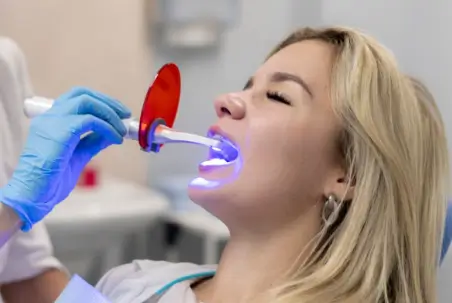
Most whitening products use peroxide-based agents such as hydrogen peroxide or carbamide peroxide. These ingredients penetrate the enamel and break down stain molecules within the tooth structure. During this process, the enamel becomes temporarily more porous, which allows stains to be lifted.
This porosity is usually temporary. Saliva helps remineralise the enamel and restore its structure over time. However, when a teeth whitening treatment is used too frequently, the enamel may not have enough time to recover fully.
Repeated exposure can leave enamel in a weakened state, increasing sensitivity and making teeth more vulnerable to surface changes. Sensitivity is not just a minor side effect. It is often a sign that the enamel needs time to stabilise before further treatment.
What Happens When Whitening Is Overused
When whitening is repeated too often, the effects begin to build up. One of the most noticeable outcomes is increased sensitivity. Teeth may react more strongly to hot, cold, or sweet foods, and this discomfort can last longer after each treatment.
There can also be visible changes in appearance. Instead of looking brighter, teeth may begin to look uneven. Some areas respond faster than others, creating patchy results. In some cases, overuse can lead to a chalky or slightly translucent appearance, particularly along the edges of teeth.
Although whitening does not directly remove enamel, repeated and excessive use can contribute to surface weakening. This affects how light reflects off the teeth, which can make them appear dull rather than bright.
Why Results Do Not Last
One of the main reasons people continue whitening is because the results fade over time. This is a normal process. Teeth are constantly exposed to substances that cause staining, including coffee, tea, wine, and certain foods.
Whitening does not prevent new stains from forming. Without changes in daily habits or proper maintenance, discolouration will return. Overusing a teeth whitening treatment does not slow this process. Instead, it can reduce the effectiveness of future treatments and increase the likelihood of sensitivity.
This creates a cycle where people whiten more frequently, but the results still do not last. Understanding that whitening is temporary helps set more realistic expectations.
The Overlooked Role of Hygiene and Environmental Factors
Oral care is not limited to brushing and whitening. The environment in which these routines take place also plays a role. Poor hygiene conditions in bathrooms or storage areas can introduce bacteria that affect overall oral health.
In some cases, hidden pest activity contributes to this issue. Moisture and food residue can attract insects or rodents, especially in areas where oral care products are stored. These conditions can increase contamination risks and indirectly affect the effectiveness of whitening routines.
Maintaining a clean and controlled environment supports better oral hygiene and reduces factors that may interfere with cosmetic treatments.
See also: How Your Smile Affects Your Life: The Link Between Oral Health and Overall Wellbeing
How Indoor Conditions Can Influence Oral Health
Building conditions can also impact oral care outcomes. Poor ventilation, excess humidity, or hidden mould can affect the cleanliness of indoor spaces. These factors may not directly change tooth colour, but they can influence overall hygiene and product performance.
For example, high humidity can affect how whitening products are stored, potentially altering their consistency or effectiveness. In dental clinics, proper ventilation and controlled conditions are essential to ensure safe and predictable treatment outcomes.
Addressing these environmental factors helps create a more stable setting for oral care routines and professional treatments.
Why a Controlled Approach Works Better
A controlled approach to whitening is essential for both safety and effectiveness. Allowing time between treatments allows enamel to recover and remineralise. Most dental guidance suggests spacing whitening sessions over several months, depending on the method used.
Individual factors such as enamel thickness, sensitivity levels, and lifestyle habits should also be considered. A well-planned teeth whitening treatment focuses on maintaining results rather than repeatedly restarting the process.
This approach reduces the risk of damage and produces more consistent, natural-looking results over time.
Conclusion
Frequent whitening may seem like an easy way to maintain a bright smile, but it often leads to enamel stress, sensitivity, and uneven results. Overusing a teeth whitening treatment does not improve outcomes and can make the problem worse.
At the same time, environmental factors such as hygiene conditions and indoor air quality can influence overall oral care effectiveness. Addressing both how whitening is done and the conditions surrounding it leads to better and longer-lasting results.
A balanced and informed approach, supported by proper care and realistic expectations, is the key to achieving a brighter smile without compromising long-term dental health.
FAQs
1. How often should I use a teeth whitening treatment?
Most people should wait several months between treatments to allow the enamel to recover properly.
2. Can frequent whitening damage enamel?
Excessive use can weaken enamel over time and increase sensitivity, especially without proper intervals.
3. Why do whitening results fade quickly?
Results fade due to daily exposure to staining foods and drinks, as well as natural wear.
4. Is sensitivity after whitening normal?
Yes, temporary sensitivity is common because enamel becomes more porous during the process.
5. Can poor hygiene conditions affect whitening results?
Yes, contaminated environments and poor storage conditions can impact oral health and treatment effectiveness.
6. What is the safest way to maintain white teeth?
Use whitening treatments at recommended intervals, maintain good oral hygiene, and avoid excessive repetition.