Introduction
Every engineered product, from a small medical device to a large bridge structure, relies on materials that must perform reliably under real-world conditions. Engineers cannot rely on assumptions when selecting materials or designing components. Instead, they depend on measurable data that reveals how a material behaves when subjected to forces such as tension, compression, and surface contact. This is where mechanical testing becomes essential.
Mechanical testing provides engineers with a structured way to evaluate the physical behavior of materials under controlled conditions. Through standardized testing methods, engineers can determine whether a material is strong enough, flexible enough, or durable enough for a specific application. Without this information, it would be impossible to guarantee product safety, structural reliability, or long-term performance.
Among the many types of tests used in engineering laboratories, three stand out as foundational: tensile testing, compression testing, and hardness testing. These methods help engineers understand how materials respond when stretched, compressed, or indented. Together, they form the backbone of modern material evaluation and quality control.
For students entering engineering fields, professionals working in manufacturing, or anyone interested in materials science, understanding the basics of mechanical testing is an important step toward mastering material performance. This guide explains the core principles behind tensile, compression, and hardness tests and why these tests remain essential tools in engineering practice.
What Is Mechanical Testing?
Mechanical testing refers to a group of laboratory procedures used to evaluate how materials behave under various types of physical forces. These tests measure properties such as strength, stiffness, ductility, and resistance to deformation.
The goal of mechanical testing is not simply to break materials but to understand how they respond during the entire loading process. Engineers examine how a material initially deforms, how it continues to resist stress, and how it ultimately fails. These insights help determine whether a material is suitable for its intended application.
Mechanical testing is widely used across industries including aerospace, automotive manufacturing, construction, energy production, and medical device development. Each industry relies on accurate material data to ensure that components perform safely under operational stresses.
Testing procedures are typically conducted using specialized equipment that applies controlled forces while recording how the material reacts. These measurements allow engineers to calculate important mechanical properties that guide design decisions.
Although there are many specialized tests in materials science, tensile, compression, and hardness tests form the core foundation of mechanical evaluation.
Why Mechanical Testing Is Critical in Engineering
Engineering design requires more than theoretical calculations. Materials must behave predictably when exposed to real-world forces such as loads, impacts, pressure, and environmental conditions.
Mechanical testing helps engineers validate their assumptions. By measuring how materials perform under controlled laboratory conditions, engineers gain reliable data that can be used in simulations, safety calculations, and product design.
This testing also plays a vital role in quality control. Manufacturing processes can introduce variations in material properties due to differences in processing temperatures, chemical composition, or fabrication techniques. Mechanical testing ensures that production materials meet required specifications.
Another important role of mechanical testing is failure analysis. When a component fails unexpectedly, engineers often conduct mechanical tests to determine whether the material met its design requirements or whether hidden defects contributed to the failure.
Because of these critical roles, mechanical testing remains one of the most trusted methods for verifying material performance in engineering.
Tensile Testing: Understanding Material Behavior Under Tension
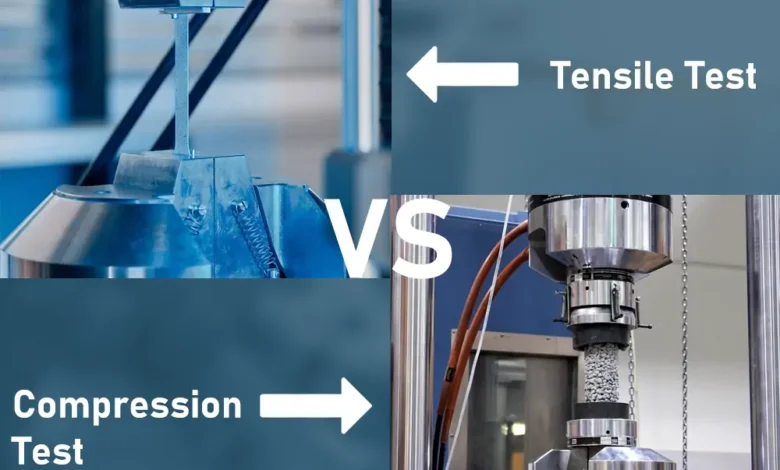
Tensile testing is one of the most widely used methods in mechanical testing. This test measures how a material behaves when it is pulled apart.
During a tensile test, a specimen is placed into a testing machine that gradually applies a pulling force along the length of the material. As the load increases, the machine records both the applied force and the resulting elongation of the specimen.
This process produces a stress-strain curve that reveals how the material responds during deformation. Engineers study this curve to determine several important properties.
One key measurement is tensile strength, which represents the maximum stress the material can withstand before breaking. Another important property is yield strength, which indicates the point at which the material begins to deform permanently rather than returning to its original shape.
Ductility is also evaluated during tensile testing. This property describes how much a material can stretch before it fractures. Materials with high ductility tend to elongate significantly before failure, while brittle materials break with little deformation.
Tensile testing is commonly used for metals, polymers, composites, and many other engineering materials. The results help engineers determine whether a material can safely handle the forces expected in its intended application.
Compression Testing: Evaluating Strength Under Pressure
While tensile testing focuses on pulling forces, compression testing examines how materials behave when subjected to compressive loads. In this type of mechanical testing, the material specimen is placed between two plates and compressed until deformation or failure occurs.
Compression testing is particularly important for materials that are primarily used to bear loads through compression rather than tension. Concrete, ceramics, and certain metals often fall into this category.
During the test, engineers measure how the material shortens under increasing load. The data collected allows them to determine compressive strength, which represents the maximum stress the material can withstand before crushing or collapsing.
In some materials, compression can lead to buckling or structural instability rather than direct fracture. Observing these behaviors provides valuable insight into how structures might behave under real-world loading conditions.
Compression testing is commonly used in civil engineering and construction, where materials must support large structural loads over long periods of time.
Understanding compressive properties helps engineers design buildings, bridges, and foundations that remain stable and safe throughout their service life.
Hardness Testing: Measuring Resistance to Surface Deformation
Hardness testing focuses on a different aspect of mechanical testing. Instead of applying large tensile or compressive forces, hardness tests evaluate how resistant a material is to localized surface deformation.
In a typical hardness test, a specialized indenter presses into the surface of the material under a controlled force. The size or depth of the indentation provides a measure of the material’s hardness.
Hardness is closely related to other mechanical properties such as strength and wear resistance. Harder materials often resist scratching, abrasion, and surface damage more effectively.
There are several standardized hardness testing methods used in engineering laboratories. Each method uses a specific indenter shape and load to measure hardness under controlled conditions.
Hardness testing is widely used in manufacturing because it is relatively quick and does not require large sample preparation. Engineers often use hardness measurements to verify heat treatment processes or confirm material consistency in production batches.
Because the test only affects a small surface area, it can sometimes be performed directly on finished components without causing significant damage.
Read Also: Copper Mining: Key Techniques and Industry Insights for 2025
How Engineers Interpret Mechanical Testing Results
Mechanical testing produces numerical data, but the real value lies in how engineers interpret that data. Understanding the relationships between different mechanical properties allows engineers to predict how materials will behave under complex loading conditions.
For example, a material with high tensile strength may perform well in structures subjected to stretching forces but may behave differently under compression. Similarly, a material with high hardness may resist wear but could also be more brittle under impact.
Engineers often evaluate multiple mechanical testing results together to gain a complete understanding of material performance. Tensile strength, compressive strength, hardness, and ductility all contribute to a broader picture of material behavior.
This integrated approach ensures that design decisions are based on reliable data rather than assumptions.
The Role of Standards in Mechanical Testing
Consistency is essential in engineering measurements. Mechanical testing procedures are therefore conducted according to internationally recognized standards that define specimen dimensions, loading rates, and testing conditions.
These standards ensure that test results from different laboratories can be compared reliably. Engineers working in different industries or countries can interpret results with confidence because they follow the same established procedures.
Standardized testing also supports regulatory compliance. Many industries require materials to meet specific mechanical performance criteria before they can be used in critical applications.
Following standardized mechanical testing methods ensures that materials meet these requirements and perform safely in their intended environments.
Frequently Asked Questions
What is mechanical testing in engineering?
Mechanical testing refers to laboratory procedures used to evaluate how materials respond to forces such as tension, compression, and indentation. These tests help engineers determine properties like strength, ductility, and hardness.
Why is tensile testing important?
Tensile testing helps engineers understand how a material behaves when it is stretched. It provides critical measurements such as tensile strength, yield strength, and elongation, which are essential for safe design.
What materials are commonly tested using compression tests?
Compression tests are commonly used for materials that carry loads primarily through compression, including concrete, ceramics, and certain structural metals.
How does hardness testing differ from other mechanical tests?
Hardness testing measures resistance to localized surface deformation rather than large-scale structural loading. It typically involves pressing an indenter into the material surface.
Do engineers rely on multiple mechanical tests when selecting materials?
Yes. Engineers often evaluate tensile, compression, hardness, and other tests together to gain a complete understanding of material performance under different conditions.
Conclusion
Mechanical testing plays a vital role in modern engineering by providing the reliable data needed to evaluate material performance. Without these testing methods, engineers would have limited insight into how materials behave under real-world forces.
Among the many testing techniques available, tensile testing, compression testing, and hardness testing form the foundation of material evaluation. Tensile tests reveal how materials respond to stretching forces, compression tests measure resistance to crushing loads, and hardness tests evaluate surface durability and wear resistance.
Together, these methods allow engineers to design safer structures, develop more durable products, and maintain strict quality standards across industries. Mechanical testing not only supports innovation but also ensures that materials perform reliably in demanding environments.
For engineers and students alike, understanding the principles behind these tests is an essential step toward mastering materials science. By learning how materials behave under tension, compression, and indentation, engineers gain the knowledge needed to create designs that are both efficient and safe.
In a world increasingly dependent on advanced materials and complex structures, mechanical testing remains one of the most trusted tools for transforming theoretical knowledge into practical engineering solutions.