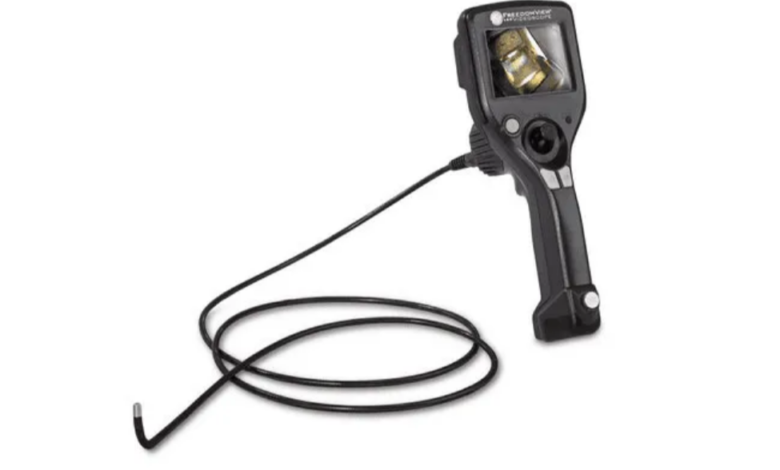
Helicopter maintenance is a different world compared to fixed-wing aircraft. Engine bays are compact, access points are limited, and inspections often require careful planning just to get a usable view. When the job calls for internal visual confirmation without pulling major assemblies, videoscopes and borescopes become the practical solution. Used well, they can shorten troubleshooting time, reduce unnecessary removals, and improve documentation quality.
For teams that rely on remote visual inspection tools, companies like USA Borescopes supply industrial inspection equipment that helps technicians document conditions inside tight compartments and hard-to-reach components.
Why are helicopter engine compartments uniquely difficult
Helicopter engines and surrounding compartments tend to combine multiple challenges at once.
- Tight packaging leaves minimal room for probe routing
- Obstructions such as lines, harnesses, clamps, and brackets block straight paths
- Curved access routes demand precise control of tip articulation
- Vibration and movement can make stable viewing more difficult during certain checks
- Heat retention in the bay can limit timing and handling comfort
- Many access points require careful FOD control and tool discipline
These constraints create a common problem: the inspection itself is possible, but getting a clear image of the right area can take multiple attempts. A few practical adjustments in scope selection and technique can reduce repeated insertions and help the inspection produce evidence that others can rely on.
Choosing the right scope for tight access points
The best equipment choice is the one that matches the geometry of the access route and the inspection objective. In helicopter engines, diameter, articulation, and viewing direction can matter more than anything else.
Diameter, length, and tip articulation
Probe diameter is often the gating factor. If the scope is slightly too large, it can snag, bind, or fail to pass through tight turns. In tight areas, a smaller diameter probe can outperform a brighter system simply because it can reach the target area without forcing the route.
Length matters too. A probe that is too short limits reach, while an excessively long probe can reduce handling control and increase the risk of tangles in crowded bays. The goal is enough length to reach key zones while keeping the operator in control.
Tip articulation is where many inspections succeed or fail. When the inspection route requires multiple bends, articulation helps maintain coverage without backing out and re-entering repeatedly. Strong articulation also helps when a technician needs to look around an obstruction rather than pushing deeper.
Dual view and rotation advantages
In tight engine bays, many inspections take longer because the technician must reposition the probe to change the viewing direction. Dual-view systems or systems that support quick direction changes can reduce this.
Rotation control also matters. When a feature needs to be confirmed from a specific angle, fine control of orientation can reduce the number of probe adjustments. The less time spent repositioning, the lower the handling risk and the faster the inspection closes out.
Route planning before insertion
One of the most effective ways to reduce inspection time is to plan the route before inserting the probe. This sounds simple, but in helicopter compartments, it can be the difference between a clean inspection and repeated attempts.
A practical approach includes:
- Identify the access point and confirm clearance around it
- Visualize the expected route based on known geometry and component layout
- Pick clear landmarks to confirm position during insertion
- Decide what evidence is required before starting
- Set a stop point if resistance is felt, so the probe is not forced
Planning also helps reduce snag risk. Most probe damage and wasted time happen when a scope catches on a clamp edge, routing bracket, or harness bundle. If the path is planned to avoid common snag points, the technician spends less time backing out and trying again.
Managing lighting, reflections, and surface conditions
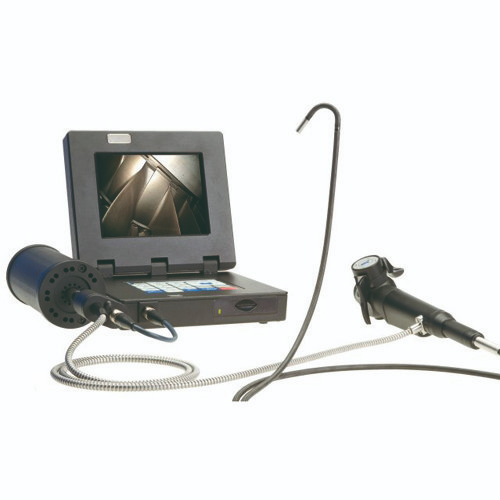
Even when a scope reaches the target, image quality issues can prevent useful interpretation. Helicopter engine areas can be reflective, coated, or unevenly lit, which makes it harder to capture evidence that stands up to review.
Getting usable images off reflective parts
Reflective surfaces can create glare that hides surface features. A few practical steps can help:
- Change the viewing angle slightly to move glare away from the feature
- Increase the distance by a small amount if the image is blown out
- Reduce light intensity if the system allows it
- Take multiple views at slightly different angles to confirm what is real
If a feature is only visible at one angle, it can be difficult for others to interpret later. Capturing two or three angles reduces doubt and reduces follow-up questions.
Dealing with residue, oil film, and carbon
Residue can mask defects or make surfaces look worse than they are. Oil film, carbon deposits, or staining can create visual patterns that mimic cracking, pitting, or impact marks.
A good habit is to capture a short sequence that shows the feature from multiple angles and distances. If the feature changes dramatically with angle, it may be a surface film or a reflection. If it remains consistent across angles, it is more likely to be a true surface indication.
In some cases, documenting the as-found condition is still valuable. Even when residue prevents perfect interpretation, the evidence can support decisions about cleaning, monitoring, or further inspection steps.
Heat, contamination, and handling practices
Helicopter engine bays can stay hot for a long time, and that affects both safety and inspection results. Heat can also increase the risk of contamination transfer if handling practices are not consistent.
Practical handling considerations include:
- Respect the cooling time and shop procedures before inserting probes
- Keep the probe clean to reduce residue transfer between inspections
- Protect access points to reduce contamination or foreign object risk
- Avoid forcing the probe through resistance
- Use a controlled insertion pace to reduce snag and abrasion
FOD prevention matters. A small piece of debris introduced during an inspection can become a serious issue later. The inspection process should include a clear plan for probe control, accessory control, and access point management from start to finish.
Turning findings into usable documentation
The inspection only adds value if the findings can be understood by others and used to make a decision. In helicopter engine work, this is often where things break down. A technician may see something concerning, but the media capture does not clearly show location, scale, or context.
To produce useful documentation, capture:
- A location establishing a view that shows a recognizable landmark
- A closer view that clearly shows the feature
- A second angle view to confirm the feature is not glare
- A short video sweep that shows the feature and the surrounding area
Pair the media with simple, direct notes:
- What component or zone is shown
- What is the concern
- Whether it appears stable, progressing, or uncertain
- What is the recommended next step
A well-documented scope inspection prevents the next person from having to redo the work to understand what was seen.
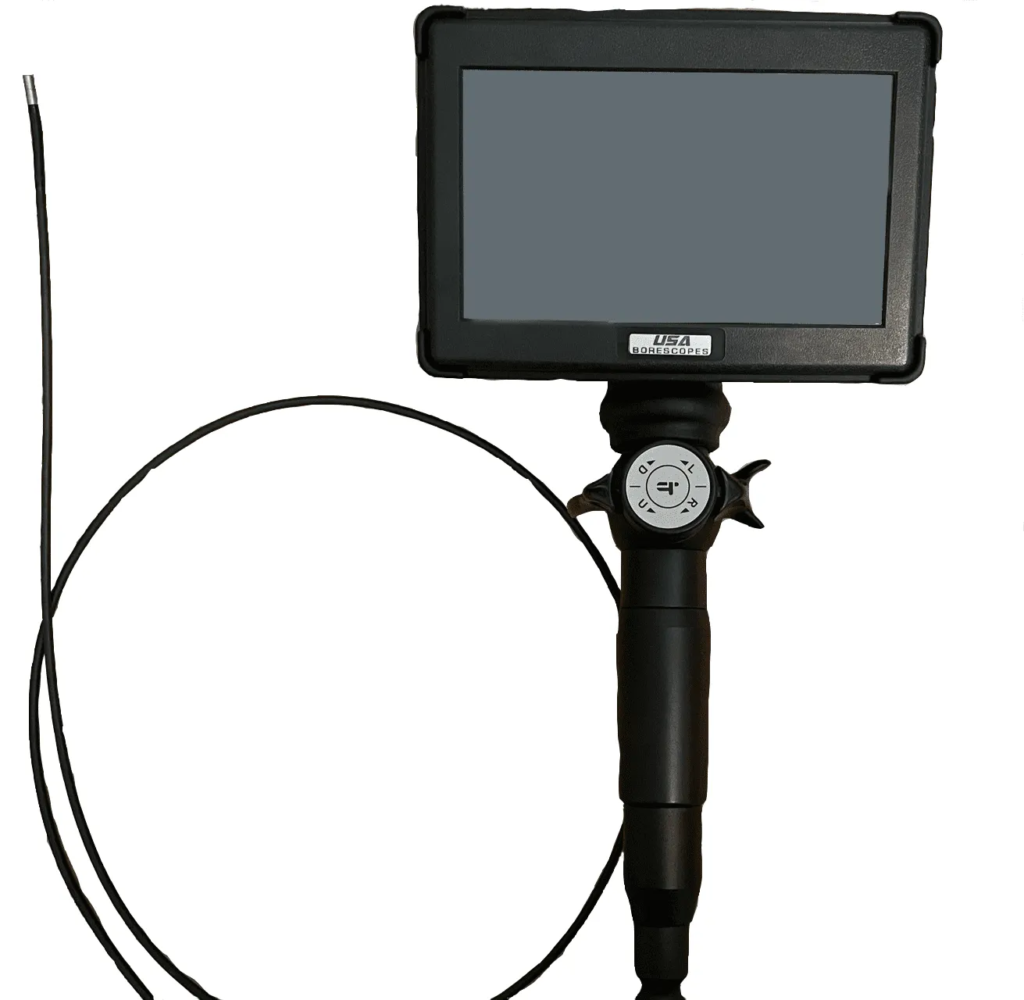
Hard-to-access inspections of helicopter engines are challenging, but most losses stem from repeated insertions, unclear imagery, and weak documentation. With the right scope selection, route planning, lighting technique, and evidence habits, technicians can reduce rework and produce findings that support faster decisions. The result is a smoother workflow, fewer unnecessary removals, and more consistent inspections across shifts.
For teams looking to improve remote visual inspection capability, USA Borescopes provides industrial inspection systems and support services that can fit demanding inspection environments. To discuss a helicopter engine inspection use case or get guidance on selecting equipment for tight access points, visit the USA Borescope’s contact page to reach their team.
About The Author
The author is an independent inspection technology specialist with experience supporting aviation and industrial maintenance teams. Their work focuses on inspection planning, evidence quality, and practical techniques for remote visual inspection in confined spaces. They write to help technicians improve reliability and reduce rework.