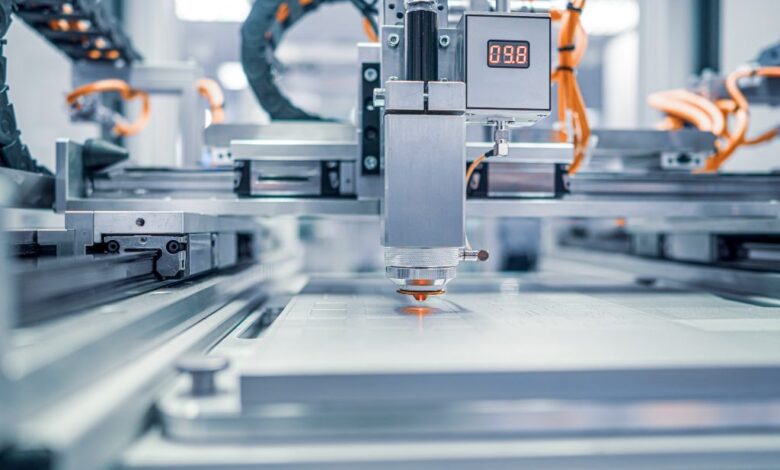
From medical implants that must function flawlessly inside the human body to aerospace components that endure extreme stress, the demand for ultra-precise parts is accelerating. This isn’t merely about making things smaller or faster; it’s a fundamental shift in how complex products are designed and delivered. At the heart of this transformation lies a sophisticated manufacturing discipline: Swiss-type machining, a technology increasingly critical to innovation across multiple high-tech sectors.
The Technical Demands Driving a New Era
Several converging trends are pushing precision engineering to its limits. The miniaturisation of medical devices, for instance, now requires components with features measured in microns—far thinner than a human hair. A single bone screw for a spinal fusion procedure demands thread forms held to tolerances that conventional machining cannot reliably achieve. Similarly, the electrification of transport relies on thousands of high-integrity connections, from battery contact pins to sensor housings, where failure is not an option. These parts must be produced not just accurately, but consistently, across volumes that can scale from prototype batches to millions of units.
This level of complexity places immense strain on traditional supply chains. The reactive model of sending a design to a shop and hoping for the best is being replaced by a more collaborative approach. Engineers now seek partners who can engage during the design phase itself, offering insights on manufacturability that can pre-empt costly revisions. It’s a shift from transaction to partnership, where deep technical capability becomes a shared asset.
The Partnership Model in Practice
Consider the case of a manufacturer developing a next-generation surgical tool. The design incorporates slender titanium shafts with intricate internal cooling channels. Finding a supplier capable of holding the required ±0.005 mm tolerances while maintaining material integrity is a strategic challenge. The solution increasingly lies in partnering with specialists who have dedicated their operations to such demanding work.
Companies like Falcon CNC Swiss exemplify this model. Their entire infrastructure is built around navigating the intersection of complexity and scale. With a production floor housing over 300 Swiss-type and CNC machines, automated systems for continuous operation, and quality certifications spanning ISO 13485 for medical devices and IATF 16949 for automotive, they provide the kind of advanced Swiss machining capabilities that de-risk critical projects. Their material lab, for instance, validates incoming stock using XRF spectrometry, catching potential issues before production begins—a practice that measurably reduces scrap rates compared to industry norms.
Technology, Traceability, and Trust
The reliability of modern manufacturing rests on two pillars: process control and data integrity. In regulated industries like aerospace and medical devices, quality cannot be an afterthought; it must be engineered into every step. Leading machining operations now integrate in-process probing, statistical monitoring, and full material traceability directly into their workflows. When a component leaves the factory floor, its digital history—which machine, which tooling batch, which inspection report—follows it. This isn’t just about compliance; it’s about building a foundation of trust where customers can have absolute confidence in the parts they receive.
This rigorous approach also enables faster innovation. When a prototype run can transition seamlessly into high-volume production using the same validated processes, development cycles compress dramatically. Time-to-market advantages accumulate, creating competitive differentiation that resonates far beyond the factory floor.
Navigating the Skills Landscape
One of the industry’s most persistent challenges is the shortage of skilled machinists. The craftsmen who mastered manual and cam-operated machines are retiring, while the pipeline of new talent trained on multi-axis CNC equipment remains tight. This skills gap means that true machining expertise is increasingly concentrated among specialists who have made sustained investments in training and retaining top engineers. For buyers, this reinforces the value of forming long-term relationships with proven partners. The knowledge embedded in an experienced team—how to dial in a tricky titanium alloy, how to read the subtle signals of tool wear—cannot be replicated by simply purchasing newer equipment.
See also: Best Pest Control Burnaby Services for Effective Home Protection
Looking Ahead: The Strategic Imperative
For engineering leaders and procurement professionals, the implications are clear. The global market for precision components will continue its steady expansion, driven by structural trends in healthcare, energy, and electronics. The companies that thrive will be those that view their machining suppliers not as interchangeable vendors, but as strategic collaborators capable of contributing design insight, guaranteeing quality, and scaling production reliably.
The choice of partner is itself a strategic decision. It requires looking beyond unit pricing to assess engineering depth, quality infrastructure, and demonstrated experience across relevant industries and materials. In an era where product performance is often defined by the limits of manufacturing precision, securing access to world-class capability is not just an operational necessity—it is a competitive advantage.
The quiet hum of advanced CNC lathes, guided by skilled hands and informed by decades of experience, is the sound of ideas becoming reality. It is the precision edge that, increasingly, separates market leaders from the rest.