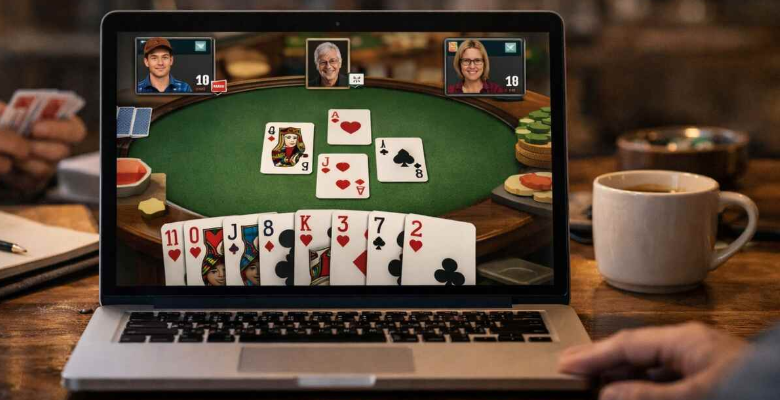
The Hearts card game looks gentle on the surface. The rules are simple, the pace is calm, and the goal seems straightforward. Avoid points. Do not take hearts. Stay away from the Queen of Spades. But anyone who has spent time with the game knows that Hearts is not really about avoiding cards. It is about managing risk and controlling decisions in an environment where you never have complete information.
That is why the Hearts game remains so compelling, especially in digital formats like https://solitaire.net/hearts. Each hand becomes a small lesson in judgment, restraint, and timing. This article explores how Hearts teaches players to assess risk, make controlled decisions, and accept uncertainty without losing focus.
Why Risk Is Central to the Hearts Game
You Cannot Avoid Risk Entirely
In Hearts, risk is unavoidable. Every card you play carries potential consequences. Even a low card can turn dangerous if the timing is wrong. Unlike games where aggression leads to reward, Hearts punishes overconfidence.
The key is not eliminating risk, but managing it. Players constantly decide which risk is smaller and which one can wait. That mindset shapes every hand.
The Hearts game rewards players who think ahead rather than react in the moment.
Incomplete Information Forces Judgment
You never see the full table. You only know your own hand and what has already been played. Every decision is made with partial information, which mirrors real decision making more than many games do.
On platforms like https://solitaire.net/hearts, this uncertainty remains intact. Digital convenience does not remove the need for judgment. It simply removes distractions, making the decision process clearer.
The Passing Phase as Early Risk Control
Choosing What Danger to Remove
Passing cards is the first act of risk management in every Hearts game. Giving away three cards reshapes your exposure before play even begins.
High hearts and the Queen of Spades represent obvious danger, but passing is not always that simple. Sometimes holding a high card gives you control later. Sometimes passing it only shifts risk temporarily.
Strong players treat the pass as a strategic decision, not a reflex.
Accepting That Risk Moves, Not Disappears
When you pass danger away, it does not vanish. It moves to another player. That shift affects the entire table.
Understanding this helps players make calmer decisions later. If you passed points, you know someone else is carrying that risk. If you received danger, you adjust your strategy early.
The Hearts game teaches that risk is often redistributed, not removed.
Decision Control During Trick Play
Playing Low Does Not Always Mean Safe
Many beginners assume low cards are always safe. In reality, low cards can force you into later danger if they leave you without escape options.
Decision control in Hearts means thinking beyond the current trick. Sometimes taking a small hit early prevents a bigger one later.
On https://solitaire.net/hearts, the clear layout makes it easier to focus on these long term effects.
Timing Is a Form of Control
Knowing when to play a dangerous card matters as much as knowing how. Holding onto risk too long often makes it worse. Releasing it too early can expose you later.
Good Hearts players constantly ask one question. Will this decision give me more control or less control in future tricks.
That question defines smart play.
The Role of Patience in Hearts
Waiting for Safer Moments
Hearts rewards patience. Players who rush to dump danger often end up trapped. Waiting for the right lead or the right suit can turn a risky card into a harmless discard.
Patience is a form of discipline. It keeps players from making emotional decisions after a bad trick.
This is one reason the Hearts game feels mentally steady rather than frantic.
Accepting Temporary Discomfort
Sometimes you must carry danger longer than you want. That discomfort is part of the game. Strong players accept it without panic.
They understand that short term discomfort can lead to long term safety. Hearts teaches players to tolerate uncertainty without forcing action.
Risk Versus Reward in Shooting the Moon
The Biggest Decision in the Game
Shooting the moon is the clearest example of risk versus control in Hearts. The potential reward is large. The penalty for failure is severe.
This strategy only works when control is high. You need strong cards, suit dominance, and the ability to force opponents into bad positions.
Attempting it without control is not bold. It is careless.
Reading the Table Matters More Than Courage
Successful moon attempts depend as much on opponents as on your own hand. If others sense your plan early, they can block it.
This makes shooting the moon a lesson in awareness and restraint. Sometimes the smartest decision is not to try at all.
The Hearts game teaches that not every opportunity should be taken.
See also: Home Automation Installation: Simplifying Your Life with Smart Tech
Emotional Control and Decision Quality
Recovering From Bad Outcomes
Even good decisions can lead to bad outcomes in Hearts. A card you expected to be safe turns dangerous. An opponent makes an unexpected move.
Emotional reactions often cause more damage than the original mistake. Calm players recover faster because they continue making controlled decisions.
This emotional discipline is a quiet skill the Hearts game reinforces over time.
Separating Results From Decisions
Strong players judge their play by decision quality, not just results. A good decision that fails is still a good decision.
This mindset helps players improve steadily instead of chasing short term wins. On https://solitaire.net/hearts, the consistent environment makes this learning process easier.
Why Hearts Feels Like a Real Life Skill
Risk Without Chaos
Hearts models real decision making in a controlled space. You manage risk, adapt to incomplete information, and make choices with long term consequences.
Unlike many games, Hearts does not reward impulse. It rewards awareness, restraint, and thoughtful action.
That is why the game feels meaningful even after many rounds.
Control Without Total Power
You never fully control the outcome in Hearts. That limitation is part of the lesson. The game teaches players to focus on what they can control and accept what they cannot.
This balance keeps the game engaging and realistic.
Digital Hearts and Clearer Thinking
Fewer Distractions, Better Decisions
Playing Hearts online removes physical distractions like shuffling, scoring, and table management. Platforms like https://solitaire.net/hearts let players focus fully on decisions.
That clarity makes patterns easier to spot and mistakes easier to understand.
Learning Through Repetition
Digital play allows frequent, consistent practice. Over time, players internalize risk patterns and decision habits without conscious effort.
The Hearts game becomes less about rules and more about judgment.
Conclusion
The Hearts game is more than a card game. It is a lesson in risk awareness and decision control. Every hand asks players to weigh uncertainty, manage exposure, and act with restraint.
By teaching patience, emotional control, and long term thinking, Hearts offers skills that extend beyond the table. Whether played casually or online at https://solitaire.net/hearts, the game rewards those who think clearly under pressure.
In a world full of rushed decisions, Hearts stands out by teaching the value of calm, controlled choice.