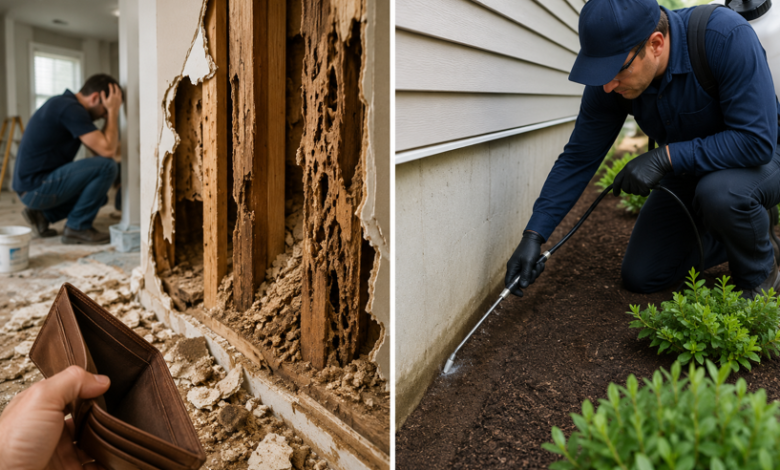
Australia is famous for its extreme climatic events such as bushfires, heavy storms, and heat waves. But among all the possible hazards that may threaten your property in the country, there is one silent killer. We talk about termites – these little insects consume timber frames and supporting structures without making any noise.
Even though many homeowners think that the money spent on regular pest inspections is wasted, we advise being on alert because dealing with timber pests should never be procrastinated.
Why Repairing Timber Pests’ Destruction Is Expensive
As soon as you start noticing that some areas in your home become loose, it means that it might be too late. In this article, we will explain why you should never postpone inspections and prevention of termites since fixing the destruction they cause will always deplete your budget much faster than a good preventive strategy.
Timber Pests Are Hard to Detect
Pest species tend to live and breed in warm humid climates. Termites, for instance, are social insects that primarily feed on cellulose – the primary component of timber. There are typically millions of these little pests in just one colony. Moreover, because termites are light-averse creatures, they feed on the inside of your timber frame or structure.
This means that the surface of the wooden element can remain intact, but the inside of it will be fully eaten up, leaving nothing but a thin layer of paint covering nothing but air. Therefore, it is almost impossible to notice that something is wrong until a structural part collapses due to the damage done.
The Costly Consequences of Neglecting Termites
In this case, the financial implications of neglecting the threat are huge. For example, some homeowners across Australia find themselves forced to perform expensive structural renovations due to the presence of timber pests on their properties. In particular, it may involve changing wall frames, roof trusses, load-bearing beams, etc.
Furthermore, it is essential to know that most Australian homeowner insurance plans usually exclude pests infestations from the list of possible claims. Consequently, this means that you will need to spend all the money yourself on removing the affected timber, hiring contractors, buying new material, etc. Knowing the cost of termite treatment will soon have you reaching for preventative measures.
Strategies to Prevent Termites from Invading Your House
Dealing with pest attacks can be avoided by applying the following approaches. Firstly, you need to contact a professional to conduct routine inspections of your property. In such a way, they will detect the first warning signs and help eliminate the factors conducive to the appearance of pest species such as poor drainage or timber directly contacting the soil.
Another strategy that allows preventing termites from getting to your house is to create a chemical barrier around it. In such a way, you will create a zone that pests will not be able to pass. Also, you can install bait stations for attracting the pests in advance and then exterminating them.
See also: Fax Services vs Traditional Fax Machines: Making the Right Choice for Your Business
The Long-Term Benefits of Proactive Pest Management
While investing hundreds of dollars into maintaining pest control can seem to be quite disappointing at first, this money is an actual protection investment. Firstly, solving a small issue is much cheaper than fixing a massive problem. Moreover, protecting your property prevents your valuable asset from losing its value.
Get Professional Help Right Away
To conclude, dealing with timber pests is an expensive thing to do. Protecting your property will save not only the integrity of your home structure but also prevent financial issues. Make sure you have created the necessary protective barriers to keep those little critters away.
So, do not delay your actions and contact a professional pest management company in your area now!