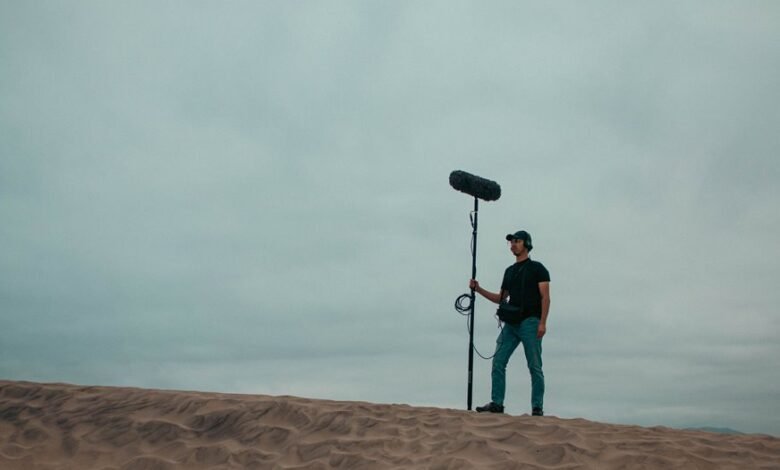
Cinematic sound design shapes perception as much as image. It works with three anchors: dialogue, Foley, ambience, and music, interlocked to stay clear without mud. Layering creates space-time textures, balancing foreground and haze. Silence and cadence guide attention, while damping and emphasis sculpt intent. A disciplined workflow and honest collaboration turn concept into a final mix. The method holds a quiet tension, and questions linger just beyond the audible threshold. Hence, the next move remains essential.
What Cinematic Sound Design Aims to Do
Cinematic sound design aims to sculpt perception as much as to accompany image. It seeks to modulate tension, shape time, and reveal inner states through texture, rhythm, and space.
The discipline negotiates sound ethics and listener responsibility, enforcing intent over noise. It adheres to loudness standards, ensuring consistent immersion while preserving tonal clarity and cinematic honesty for diverse audiences.
Building Blocks: Dialogue, Foley, Ambience, and Music
Engaging in dialogue, Foley, ambience, and music, the building blocks of cinematic sound design, form a precise triad and a porous backdrop that carries the image without overpowering it.
The elements interlock: muddy dialogue, muffled foley, and clear ambience, each disciplined by intent.
This configuration enables freedom-seeking spectators to sense texture, pace, and mood without surrendering narrative clarity.
Crafting Space and Time: Layering and Balancing for Mood
In crafting space and time, the sound designer threads space, motion, and duration into a single perceptual fabric.
Layering material yields space time texture, where cues intermingle without crowding, and balance differentiates foreground from haze.
Emotional contour emerges through selective density and timing, a controlled drift that sustains mood while preserving clarity, freedom-driven listening, and precise, experimental cohesion.
The Dialogue Between Silence and Sound: Rhythm, Pace, and Emphasis
Often the interval between breath and burst becomes a terrain where rhythm carves meaning, pacing the scene with measured restraint and sudden breathmarks that insist on attention.
The dialogue fuses silence vs. presence with a tactile timing, exploring rhythm and pacing as a sculptor’s tool.
Sound design breathes deliberately, emphasizing space, cadence, and intent while inviting fearless perception and restraint.
From Concept to Mix: Workflow, Collaboration, and Practical Tips
From concept to final mix, the workflow maps a disciplined arc: preproduction cues, tracking, editing, and sound design converging into a precise mix stage where intent translates into audible texture.
In this space, the mind tracks roles and timing, embracing workflow ideas that prioritize clarity, conflict resolution, and texture.
Collaboration tactics emerge as structured trust, iterative feedback, and shared sonic language driving cohesion.
Frequently Asked Questions
How Does Sound Design Influence Audience Emotion in a Scene?
Sound design shapes audience emotion by guiding attention, shaping nervous systems, and creating auditory immersion that clarifies intent; it modulates tempo and texture, establishing emotional pacing while preserving freedom to interpret the scene’s meaning.
What Role Do Sub-Bass Frequencies Play in Tension?
Sub bass textures amplify pressure, providing a subterranean scaffold that underscores unease. It enables tension building via low end, while steady rumble threads emotional anticipation, guiding the audience’s breath. The approach remains precise, experimental, and freedom-seeking in tone.
How Can We Balance Realism With Artistic License in Sound?
Balance realism with artistic license by calibrating textures, dynamics, and space; treat silence as a tool, then employ echo layering and selective experimentation to shape perception while preserving narrative truth in sound. Subtopic irrelevant ideas emerge, guiding expressive choices.
What Are Common Missteps in Dialogue Isolation and Clarity?
Whispers hint at misaligned dialogue and inconsistent mic techniques haunting mixes; the film’s discourse frays. The methodical narrator notes how careless placement unsettles clarity, evoking an old theater fog while listeners crave precise, liberated sonic truth.
How Do You Budget for Sound Design in Indie Productions?
Budgeting for sound design in indie productions requires a disciplined budgeting workflow, with clear line items, and careful equipment selection tailored to scope; it remains atmospheric yet precise, offering freedom while balancing cost, risk, and sonic ambition.
Conclusion
Cinematic sound design, at its core, is a disciplined sculpting of perception—space, texture, and timing coalescing into meaning. Layer, balance, breathe, and listen: the audience experiences intention, not noise. Silence becomes a lever, cadence a compass, and foregrounds yield to the haze of memory. If words are images for the ear, then what listener responsibility does a designer owe when every breath of sound begs to be felt, not explained? The mix answers silently.