Low Loss PCB Manufacturer and High Frequency PCB Manufacturer: Enabling High-Performance Electronics

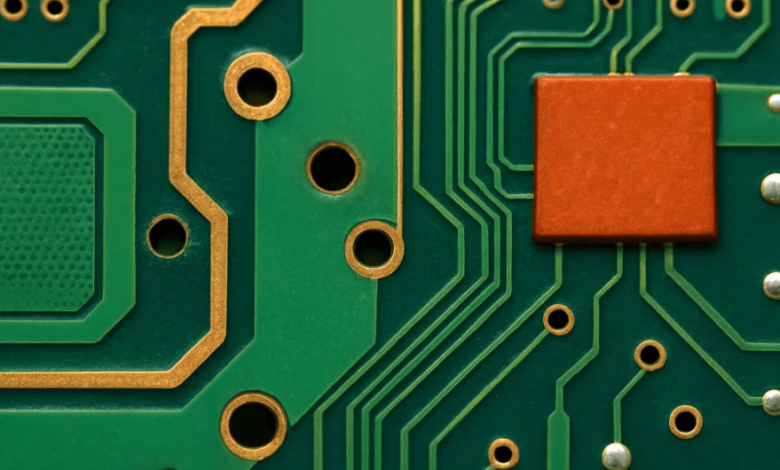
In the modern electronics industry, the demand for faster data transmission, reduced signal loss, and improved reliability is rapidly increasing. Technologies such as 5G communication, satellite systems, radar, aerospace electronics, and high-speed computing require advanced circuit boards that can handle high frequencies with minimal performance degradation. This has led to the growing importance of both a low loss pcb manufacturer and a high frequency PCB manufacturer in delivering cutting-edge PCB solutions.
These two manufacturing capabilities are closely connected, as low-loss materials are essential for high-frequency applications where signal integrity is critical.
What Is a Low Loss PCB?
A low loss PCB is a printed circuit board designed using materials that minimize dielectric loss during signal transmission. Dielectric loss occurs when electrical energy is absorbed by the PCB material, resulting in signal attenuation and heat generation.
Low loss PCBs use specialized materials such as:
- PTFE (Polytetrafluoroethylene)
- Rogers laminates
- Hydrocarbon ceramics
- Advanced high-frequency epoxy materials
These materials are engineered to ensure that signals travel efficiently with minimal energy loss, even at very high frequencies.
Importance of Low Loss PCB Technology
Low loss PCB technology plays a crucial role in maintaining signal quality and performance in modern electronic systems.
1. Improved Signal Integrity
Low loss materials reduce signal degradation, ensuring accurate and stable data transmission.
2. Higher Frequency Performance
These PCBs can operate effectively in GHz frequency ranges without significant loss of efficiency.
3. Reduced Heat Generation
Lower energy loss results in less heat buildup, improving system stability and reliability.
4. Better Power Efficiency
Efficient signal transmission reduces power consumption in high-speed electronic devices.
5. Enhanced System Reliability
Stable electrical performance leads to longer device lifespan and reduced failure rates.
What Is a High Frequency PCB?
A high frequency PCB is a circuit board designed specifically for applications that operate at high signal frequencies, typically above 500 MHz and often extending into multiple GHz ranges.
These PCBs are widely used in:
- 5G base stations
- Satellite communication systems
- Radar and defense equipment
- RF modules and antennas
- High-speed digital circuits
- Automotive radar systems
High frequency PCBs require precise control of electrical properties such as dielectric constant, impedance, and signal propagation speed.
Role of a Low Loss PCB Manufacturer
A professional low loss PCB manufacturer specializes in producing circuit boards using advanced materials and strict fabrication processes to ensure minimal signal attenuation.
Advanced Material Expertise
Manufacturers carefully select low dielectric loss materials such as Rogers or PTFE-based laminates depending on application requirements.
Precision Fabrication
High-frequency circuits require tight tolerance control, fine trace widths, and accurate impedance matching. Advanced manufacturers can achieve minimum line width and spacing of 2.5 mils and maintain impedance control tolerances as tight as ±5%, ensuring excellent signal integrity in demanding RF applications.
High-Layer and HDI Capabilities
Modern communication and computing systems often require highly complex PCB structures. Leading manufacturers support high-layer count boards up to 50 layers and advanced HDI 1+N+1 through Any-Layer constructions with delivery in as little as 10 days, helping customers accelerate product development while maintaining high performance.
Advanced Via Structures
For dense multilayer designs, manufacturing precision is critical. Capabilities such as a minimum aspect ratio of 30:1 (board thickness to hole diameter) enable reliable interconnections in complex high-frequency boards.
Strict Quality Control
Every low loss PCB undergoes rigorous testing, including:
- Electrical testing
- Impedance verification
- Thermal stability analysis
- Automated Optical Inspection (AOI)
For complex assemblies, manufacturers can further ensure reliability through 100% X-ray inspection for BGA, QFN, and FPGA packages, detecting hidden soldering defects that cannot be identified through visual inspection alone.
Role of a High Frequency PCB Manufacturer
A high frequency PCB manufacturer focuses on producing PCBs that operate efficiently under high-speed signal conditions.
Specialized Engineering Support
Manufacturers provide design assistance to optimize layouts for RF performance, signal routing, controlled impedance, and electromagnetic compatibility.
Advanced Manufacturing Techniques
Processes such as laser drilling, microvia formation, sequential lamination, and precision imaging are used to ensure consistent high-frequency performance.
Surface Finish Options
Signal quality and assembly reliability can be further enhanced through premium finishes, including:
- ENIG (Electroless Nickel Immersion Gold)
- ENEPIG (Electroless Nickel Electroless Palladium Immersion Gold)
- Hard Gold plating up to 50 µin
These finishes improve solderability, corrosion resistance, and long-term performance.
Advanced Assembly Support
Many high-frequency products require dense component placement. Modern assembly lines support 01005 component soldering capability, enabling the miniaturization required for next-generation electronics.
See Also: The Quiet Revolution in Medical Billing — and What It Means for Your Practice
Beyond Rigid Boards: Flex and Rigid-Flex Expertise
Many high-performance systems integrate flexible circuitry to save space and improve reliability. Experienced manufacturers can produce:
- Rigid-flex PCBs up to 20 layers
- Flexible PCBs up to 10 layers
These capabilities support advanced aerospace, medical, military, and wearable electronic applications.
Applications of Low Loss and High Frequency PCBs
These technologies are widely used in industries that require high-speed and reliable communication systems:
Telecommunications
5G networks, base stations, and wireless communication systems rely heavily on low loss and high frequency PCB designs.
Aerospace and Defense
Radar systems, satellite communication devices, and navigation systems require stable and high-performance circuit boards.
Automotive Electronics
Advanced driver assistance systems (ADAS) and vehicle radar systems depend on accurate signal transmission.
Medical Technology
High-resolution imaging and diagnostic devices use low loss PCBs for precise signal processing.
Industrial and IoT Devices
High-speed data communication systems require reliable PCBs with minimal signal distortion.
Quality Certifications and Compliance
When selecting a manufacturing partner, industry certifications are critical indicators of quality and reliability. Leading manufacturers maintain:
- ISO9001 certification
- ISO13485 certification for medical electronics
- Compliance with IPC Class 3 standards
These certifications demonstrate a commitment to consistent quality, traceability, and reliability for mission-critical applications.
Why Choosing the Right Manufacturer Matters
Selecting the right low loss PCB manufacturer and high frequency PCB manufacturer is critical for product success. A reliable partner provides:
- Advanced HDI capabilities
- High-layer PCB fabrication up to 50 layers
- Tight impedance control (±5%)
- Fine-line manufacturing down to 2.5 mils
- Premium surface finishes
- 100% X-ray inspection
- 01005 assembly capability
- Rigid-flex and flex PCB expertise
- Certified quality systems
These capabilities ensure superior signal integrity, reduced production defects, faster development cycles, and improved long-term product reliability.
Conclusion
The combination of low loss PCB manufacturing and high frequency PCB manufacturing is essential for modern electronics that demand speed, precision, and reliability. As communication technologies and high-speed systems continue to evolve, these advanced PCB solutions will play an increasingly important role in enabling innovation.
By partnering with an experienced manufacturer offering advanced HDI technology, high-layer PCB fabrication, precision impedance control, comprehensive inspection processes, and certified quality systems, companies can ensure optimal signal performance, improved efficiency, and long-term reliability in even the most demanding applications.