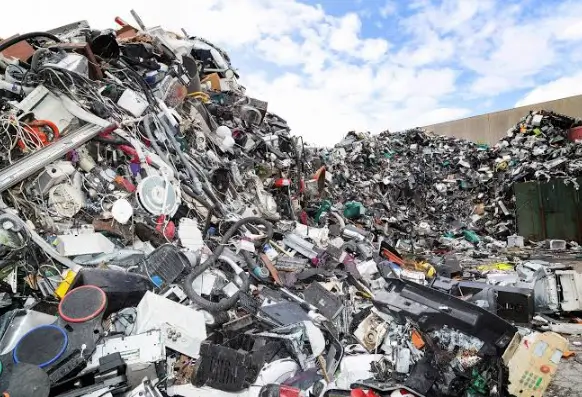
Most conversations about the e-waste environmental impact of our devices look downstream — landfills, leaching, fires. The larger share of the damage happened before the device ever reached you, in mines and refineries on the other side of the world. Once you see disposal as a decision about whether that damage gets repeated, the maths behind reuse changes completely.
The Damage Is Front-Loaded
A laptop or phone arrives carrying a debt already paid.
Its materials were extracted, refined, shipped, assembled and shipped again. Cobalt, lithium and nickel for the battery. Indium for the touch screen. Tantalum in the capacitors. Gallium in the semiconductors. A cluster of rare earth elements in the display, the speaker and the vibration motor.
Extraction is not a clean process. Mining introduces contaminants to groundwater and soil, and the regions supplying these materials often have the least regulatory protection. That environmental cost is fixed the moment the device exists.
Throwing the device away does not undo that cost. It guarantees it will be paid again for the replacement.
Why Reuse Beats Recycling on This Measure
Recycling is genuinely good. It is also lossy.
Material recovery separates metals, plastics and circuitry and returns commodities to manufacturing, which avoids some fresh mining. What it cannot recover is the manufacturing itself — the precision, the energy, the assembly, the freight.
Reuse keeps all of it. A working laptop passed to someone who needs one preserves the entire embedded investment, not a percentage of the raw material.
That is why the Electronic Recycling Association orders things the way it does. The Canadian non-profit wipes data to industry standards, professionally refurbishes what still works, and donates it to charities, schools and non-profit organisations that need technology. Only what cannot be reused goes to material recovery.
Supply Is Not Unlimited
There is a self-interested argument here alongside the environmental one.
Extraction rates for some of these elements are depleting available supplies. If manufacturers cannot secure particular alloys and rare earths, devices change — and not for the better. ERI makes the point bluntly: imagine losing touch screen functionality because indium became scarce.
Recovery from existing devices is one of the few levers that eases that pressure without requiring anyone to buy less.
The Downstream Half Still Matters
None of this makes disposal harmless.
Devices contain lithium batteries, and when those are damaged or crushed in garbage trucks or landfills they can spark fires, endangering waste workers and causing environmental damage. ERA is direct about this: electronics should never be thrown in the trash.
Heavy metals reaching soil and water is the slower version of the same story. Both are avoidable, and both are avoided by the same action.
See also: How to make smarter technology decisions in a complex market
What Actually Changes the Number
Individual decisions look too small to matter, which is the trap. Scale comes from repetition.
For households, dropping unwanted electronics at an ERA location takes one trip. There is no minimum quantity — a single laptop is worth bringing, because a single laptop can be refurbished and given to a charity.
For companies and organisations, ERA offers electronic recycling pickups so old IT equipment can be retired securely with sensitive data properly destroyed. That combination is the thing that unblocks corporate reuse: fear of data recovery from old equipment is one of the biggest obstacles to donating hardware at all, and removing it releases working machines that would otherwise sit in a storeroom until they were worthless.
ERA marked Global Recycling Day on March 18, 2026 with exactly that message. The date was seasonal; the arithmetic is permanent.
A Different Way to Frame the Decision
Instead of asking how to dispose of a device responsibly, ask a sharper question: does this device still work, and does someone need it?
If yes, disposal is the wrong category entirely. You are not recycling, you are transferring something useful.
If no, then material recovery through a provider that handles data properly and keeps waste out of landfill is the right end point.
Rethinking the Decision
The e-waste environmental impact worth reckoning with is not only what a discarded device does in the ground. It is the mining, refining and manufacturing that gets repeated every time a working machine is replaced and thrown out. Reuse preserves all of that investment where recycling preserves a fraction. Check what still works before you clear the storeroom, arrange secure data destruction so the fear stops being the blocker, and let a refurbisher decide what genuinely needs breaking down.